

Scaling a business is a common ambition, but the path to expansion is littered with financial pitfalls. Many business owners push for growth without realizing that the same moves that increase revenue can also drain bank accounts. The overspending trap when scaling a business catches even experienced operators off guard, and it is a close cousin of the broader growth trap that snares companies expanding faster than their operations can support. Research on entrepreneurial wellbeing consistently finds that aggressive scaling correlates with burnout and lower life satisfaction rather than higher, even when the business succeeds financially. Understanding where money gets wasted and how to redirect resources toward sustainable growth is the difference between thriving and merely surviving.
Understanding the Overspending Trap in Business Scaling
The overspending trap occurs when a business spends more money in pursuit of growth than the growth itself returns. Companies often invest in new hires, marketing campaigns, office space, and technology without rigorously testing whether those expenses actually move the needle. The result is a cash crunch that can undo any gains from increased sales. Because the trap feels like progress, many owners do not recognize it until it is too late. The first step to avoiding it is accepting that faster spending does not equal faster scaling.
The Danger of Premature Scaling
Premature scaling can slay a business faster than nearly anything else. When a company expands before its core operations are stable, it multiplies inefficiencies. Business financing has built-in stages precisely to avoid overspending; investors require companies to prove unit economics and product-market fit before providing larger sums. Yet many self-funded owners skip those stages and pour money into growth before the foundation is ready. The result is often a collapse under the weight of fixed costs that outpace revenue. Delaying growth until the business can handle it is not a sign of weakness but of strategic discipline.
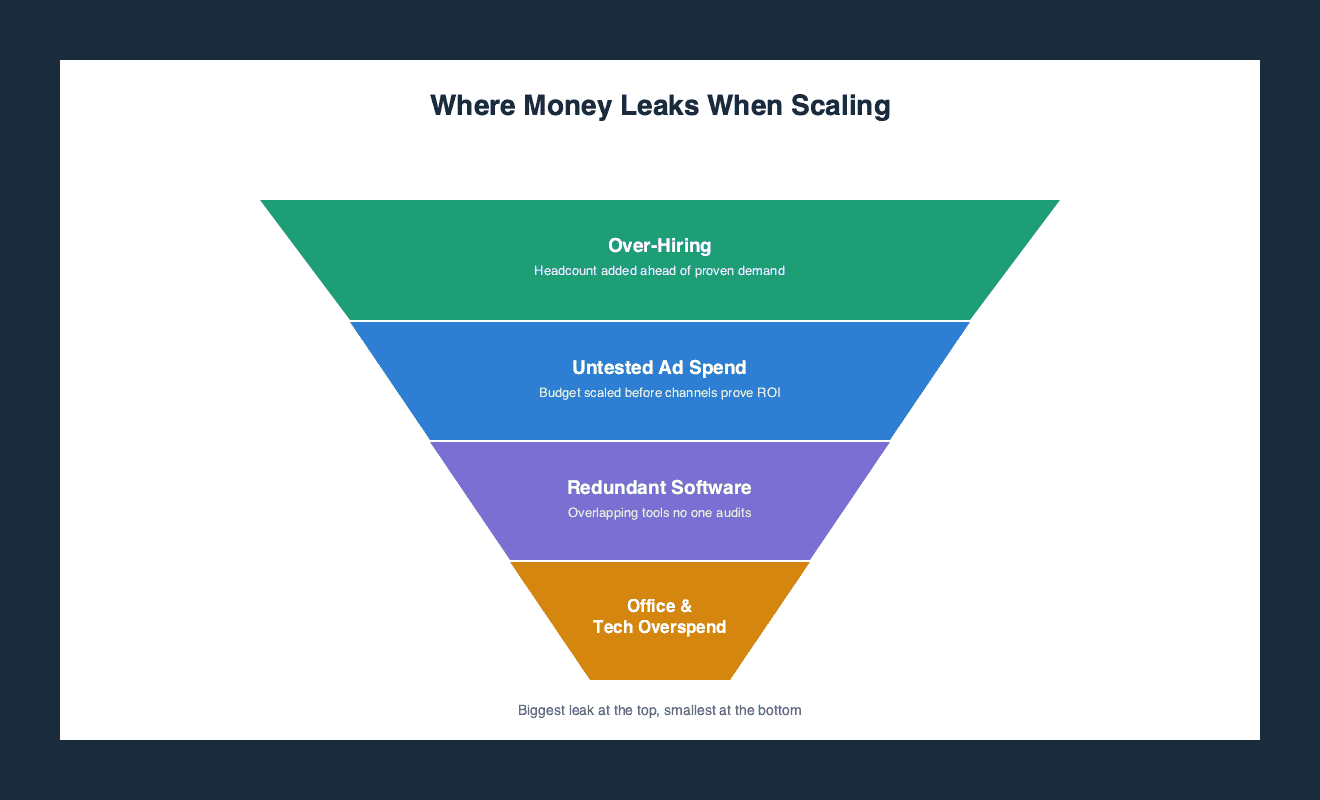
Where Money Leaks When Scaling
Too often, businesses fall into the trap of overspending on things that feel important but do not actually drive results. Common money traps include excessive spending on tools and software that duplicate existing functions, aggressive advertising campaigns without proper tracking, and over-hiring before the workload justifies new salaries. Entrepreneur’s rundown of common money traps for growing businesses warns that expenses that drain cash flow, slow growth, and keep owners stuck are the ones to watch. These leaks often hide in plain sight because they are tied to the excitement of expansion rather than to measurable outcomes.
Why Growth Can Kill Cash Flow
Growth can kill cash flow. Companies can simultaneously experience booming sales and a financial crisis. The reason is that growth often requires upfront spending on inventory, payroll, and marketing before the associated revenue is collected. A fast-growing firm may show record revenue on paper while its bank account shrinks. This cash flow gap is the engine of the overspending trap, and it is the same dynamic covered in more depth in our guide to working capital management. Owners who chase growth for its own sake risk running out of money just as sales hit new highs. The antidote is to monitor cash conversion cycles and to pace expenditures to actual collections, not just to order volume.
How to Spend Smarter as You Scale
As a business grows, the way money is spent must change. What worked at $500,000 in revenue may be wasteful at $5 million. Instead of spending on everything that seems promising, focus on investments that directly support the core value proposition, an idea closely related to the broader capital allocation strategies mid-market companies rely on to deploy resources well. That means prioritizing expenditures that improve product quality, customer retention, and operational efficiency over flashy but unproven initiatives. Track the return on every major decision. Tools like Econblox’s AI-powered business advisor can help quantify which expenditures actually move the needle and which ones merely create the illusion of progress.
Building a Foundation Before Scaling
Sometimes the smartest decision a business can make is delaying growth temporarily to strengthen what is underneath. That might mean improving internal processes, refining the product, or training a management team before adding more customers. A strong foundation makes scaling cheaper and safer because the business can absorb growth without breaking. Companies that skip this step often find themselves spending heavily to fix problems that could have been avoided. The cost of patching a weak foundation after scaling is almost always higher than the cost of strengthening it beforehand.
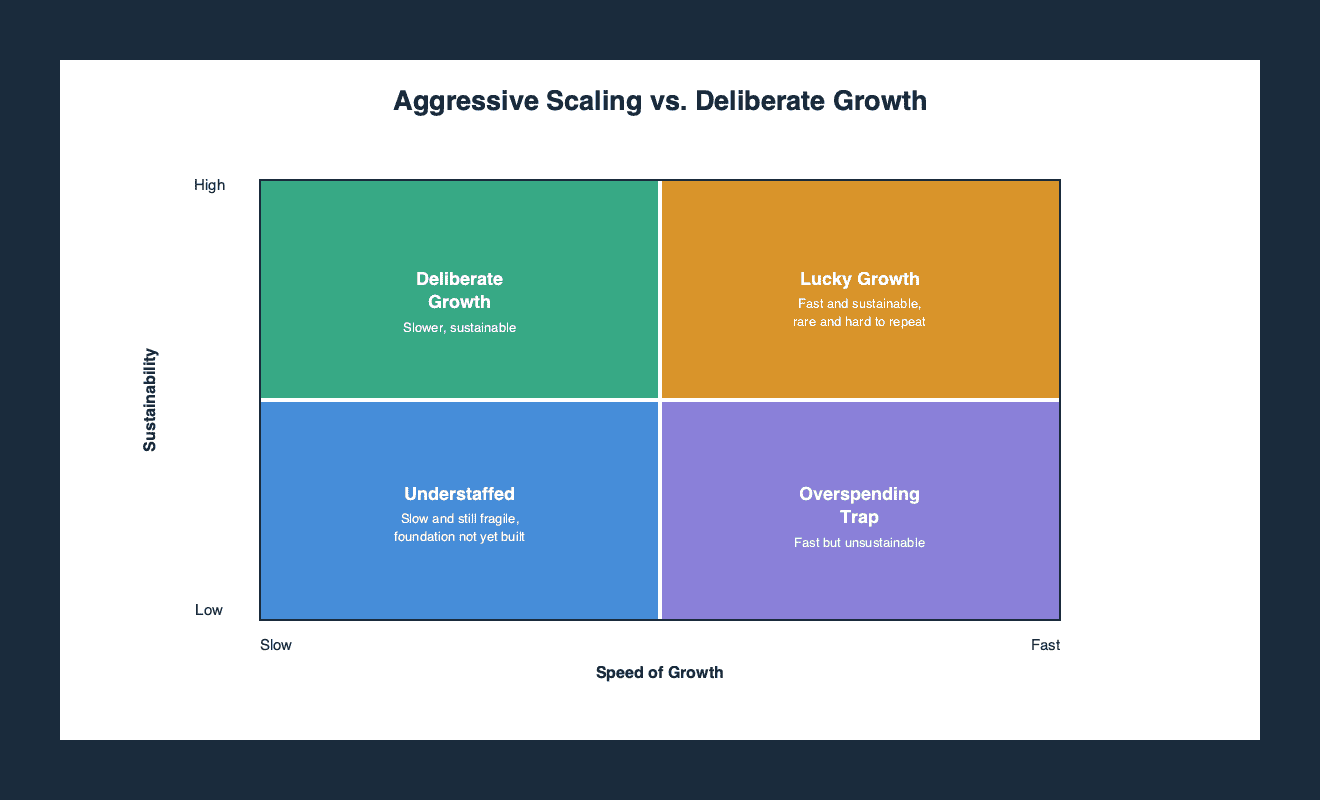
The Case for Deliberate Delaying of Growth
There is a counterintuitive path to freedom that involves not growing as fast as possible. Many owners believe that more revenue automatically means more profit and more freedom, but the opposite often occurs. Aggressive scaling can lead to longer hours, higher stress, and lower personal satisfaction. By choosing to grow deliberately and favoring strategy over scale, business owners can avoid that trap. When growth is slower but more intentional, each new customer and each new hire adds genuine value instead of just more complexity.
Measuring What Matters to Avoid the Time vs. Money Trap
Every solo business owner knows the pressure to do more to earn more. But that pressure can lead to spending money to buy time in ways that never pay off. For example, hiring a new employee before the workflow is standardized often leads to training costs and inefficiencies rather than time savings. Similarly, spending on expensive software automation without first documenting manual processes can double the workload instead of cutting it. Breaking the time vs. money trap requires measuring the actual return on each investment in terms of time freed and cash saved, not just in terms of revenue growth.
Frequently Asked Questions
How do I know if I am falling into the overspending trap?
Signs include rising expenses that do not correspond to increased profitability, frequent cash shortages despite growing sales, and a feeling of being busier but not better off. If money is going out faster than it comes in, the trap is active. Reviewing financial statements monthly and tracking the ROI of major spending categories can reveal the problem early.
What is the biggest money trap for businesses that are scaling?
The biggest trap is spending on things that feel important but do not actually move the needle. Common examples include redundant software subscriptions, aggressive marketing without proper testing, and over-hiring before processes are ready. These expenses drain cash flow and slow growth. The best preventative is to link every new expenditure to a specific, measurable business outcome.
Should I ever delay growth to avoid overspending?
Yes. Sometimes the smartest decision is to delay growth temporarily so that the business’ foundation can strengthen first. Improving operations, training staff, or refining the product before expanding can save far more money than it costs. Rushing into growth without a solid base often leads to higher spending and lower satisfaction.
How can I spend smarter as my business scales?
Focus on investments that directly improve the customer’s experience or reduce the cost of delivering your product. Favor strategy over scale: spend on what produces measurable returns. Track every decision’s ROI, and resist the urge to spend on tools or people that duplicate existing capacity. Slower, deliberate spending almost always outperforms fast, reactive spending. Scaling operations before stabilizing your baseline is one of the most common margin erosion causes found in growth-oriented companies — cost creep accelerates before revenue catches up.
 No Credit Card Required For Trial