

Every business that relies on external suppliers carries some degree of risk. But when that reliance narrows to a single supplier or a small group of suppliers for critical services, software, or hardware, the risk becomes acute. Vendor dependency risk occurs when an organization relies too heavily on one or a few external suppliers for essential operations. This concentration can turn a routine supplier problem into a major business disruption. Like customer concentration risk, understanding supplier risk and how to manage it is vital for any organization that wants to maintain control and continuity.
Understanding Vendor Dependency Risk
Vendor dependency risk is not simply about having a supplier. It is about the degree of reliance. When a company depends on a single vendor for a core function such as cloud hosting, managed security services, or specialized software development, any problem on the vendor side becomes the company’s problem. For instance, if a company uses a single cloud provider for all its data storage and applications, an outage or security incident at that provider can halt operations entirely. The risk amplifies when the supplier faces financial trouble, changes its terms, or fails to meet service levels.
The Broader Scope of Vendor Management Risk
Vendor dependency fits within the larger category of vendor management risk. Vendor management risk is the total exposure that occurs when third-party relationships are poorly governed or inadequately monitored. Without a robust oversight framework, organizations increase their vulnerability to dependency-related disruptions. Many organizations depend heavily on vendors that handle or access their data, yet risk assessments still mostly evaluate companies as isolated entities. This approach misses the interconnected nature of these dependencies and can leave significant gaps in understanding the true risk profile.
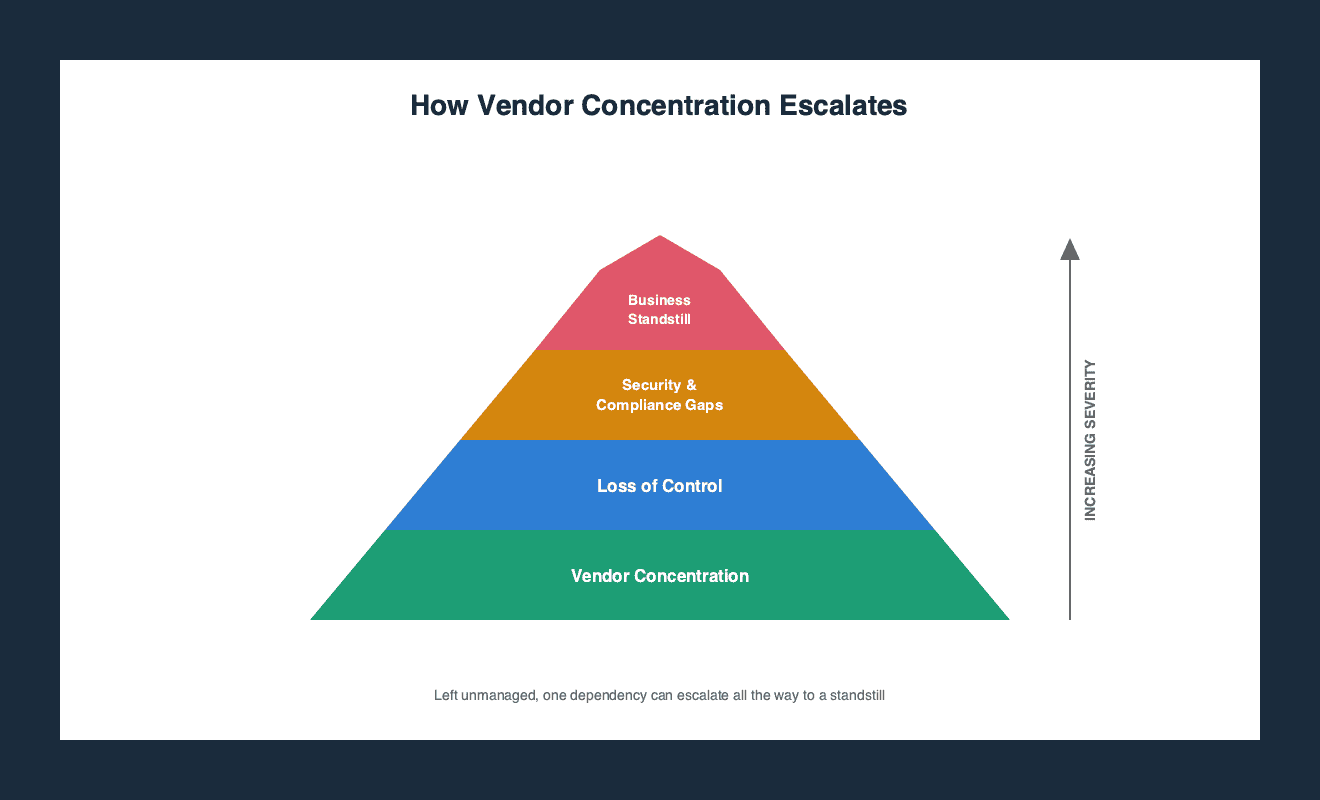
Key Risks of Supplier Concentration
Concentrating critical supply on a few vendors creates several distinct risks. One primary risk is loss of control. As a company becomes heavily dependent on a vendor, it may find it challenging to influence pricing, service levels, or strategic directions. The vendor gains leverage that can be used to the buyer’s disadvantage. Failing to diversify critical operational partners is also one of the most common hidden margin erosion causes impacting mid-market margins today, as captive buyers lose the ability to negotiate fair terms.
Another critical risk is the presence of security blind spots. Significant vulnerabilities often stem from incomplete vendor inventories and prioritization challenges. Without a complete and current list of every vendor and the data or services they access, security teams cannot assess the full risk. Additional risks include:
- Data exposure through vendor access to sensitive information.
- Operational disruption when a vendor suffers an outage or cyberattack.
- Compliance gaps if a vendor fails to meet regulatory standards.
These dangers underscore why vendor dependency must be treated as a top-tier business risk, one that acquirers weigh alongside structural revenue vulnerabilities like customer concentration risk as one of the core factors buyers use to discount a purchase price, since both signal the same kind of continuity risk to a buyer evaluating your business’s overall value.
Vendor Dependency in Project Management
Vendor dependency also appears prominently in project management. In this context, vendor dependency refers to the reliance on external suppliers or service providers for critical components, technology, or expertise. When a project depends on a single vendor for a key deliverable, the entire project timeline becomes vulnerable to that vendor’s performance. Sudden vendor supply interruptions can compound your operational overhead and severely disrupt working capital management mid-market cash flows if project timelines stall out. Effective project planning must account for these dependencies by identifying them early and building contingencies into the schedule and budget.
Healthcare Continuity and Vendor Dependencies
Healthcare organizations face unique pressures when managing vendor dependencies. Healthcare business continuity planning requires managing vendor dependencies and risks explicitly. These organizations must assess and prioritize critical vendors, align continuity plans, and address potential disruptions in the supply chain. A hospital that relies on a single supplier for life-saving medical devices or data storage for patient records must have backup plans in place. Without this focus, patient care and data security can be compromised when a key supplier fails. The same principle applies to any industry where safety or compliance is paramount.
Modeling Vendor Risk as a Dependency Network
Traditional vendor risk assessments often treat each vendor in isolation. But the reality is that vendors are interconnected. Many organizations depend heavily on vendors that handle or access their data, yet risk assessments still mostly evaluate companies as isolated entities. To get a complete picture, companies should model vendor risk as a dependency network. This approach maps how vendor relationships connect and how a failure in one part of the network can cascade through others. For a complete operational risk profile, executives should align these metrics with a systematic customer concentration audit to protect both sides of the value chain.
Adopting this network perspective is a more realistic way to understand and mitigate vendor dependency risk. Tools like Econblox’s AI-powered business advisor can help track vendor concentration alongside other continuity risks as part of routine monitoring.
Addressing Blind Spots in Vendor Risk Assessments
Significant blind spots often remain in vendor risk assessments, even in well-managed organizations. These vulnerabilities stem from incomplete vendor inventories, prioritization challenges, and a lack of resources to evaluate every relationship thoroughly. Without a complete inventory, risky vendors may never be assessed. Without clear prioritization, critical vendors may be overlooked in favor of less important ones. To close these blind spots, companies need to invest in building and maintaining accurate vendor records, using risk-based scoring to prioritize assessments, and ensuring that every vendor with access to sensitive data or systems is reviewed regularly. This work is not optional; it is essential to reducing dependency risk.
Vendor Security Risk as a Component of Dependency
Vendor security risk refers to the potential threats and vulnerabilities that arise from working with external suppliers, service providers, or vendors. When a company is dependent on a vendor that has weak security practices, the buyer inherits that risk. A breach at the vendor can lead to data theft, ransomware, or operational shutdown for the buyer. Vendor dependency magnifies security risk because switching to a more secure alternative may not be quick or easy. Companies must evaluate the security posture of every critical vendor and include contractual requirements for security standards and incident reporting.
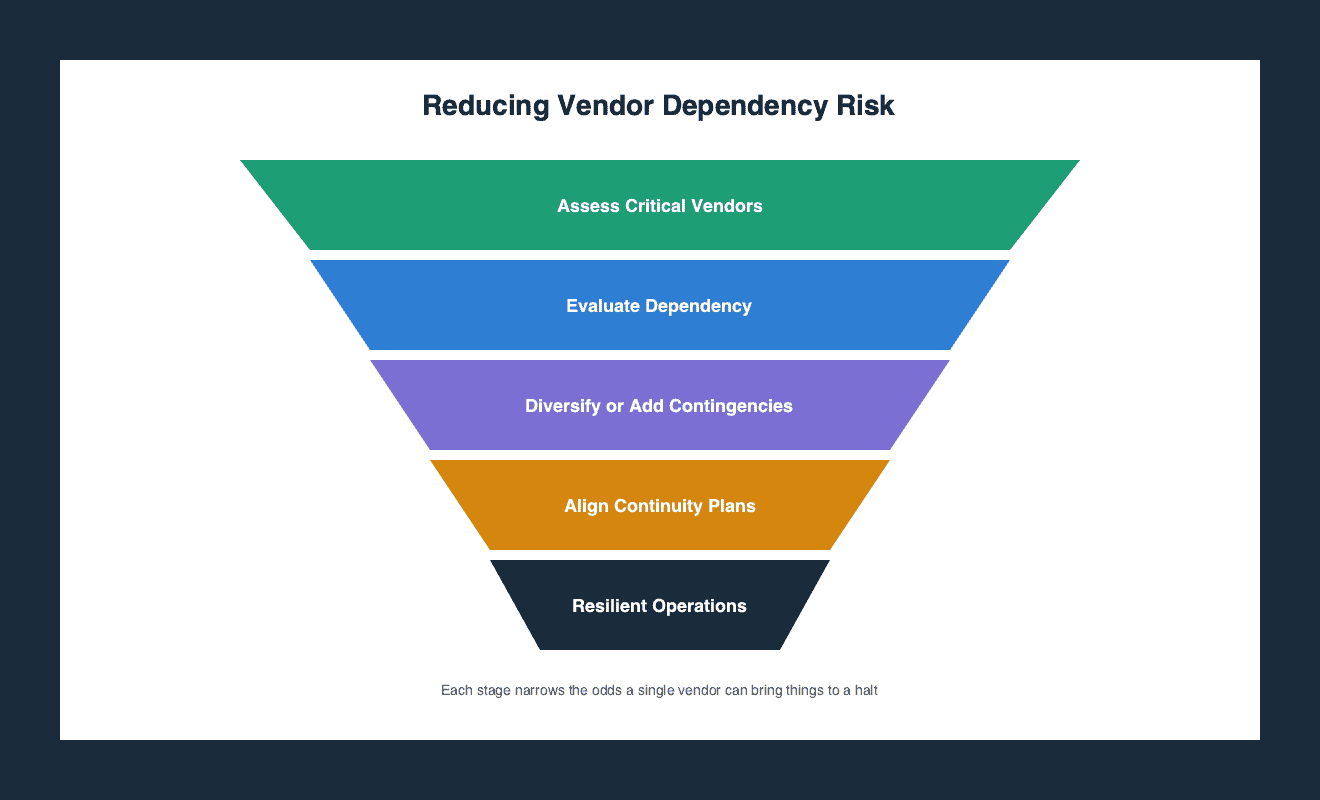
Strategies for Reducing Vendor Dependency Risk
Reducing vendor dependency risk requires a deliberate and ongoing effort, the same kind of forward-looking defense that matters for strategic exit planning more broadly. The first step is to conduct a thorough vendor risk assessment that identifies all critical suppliers. Once those suppliers are known, organizations should evaluate the degree of dependency for each one. Where concentration is high, diversification should be considered. This might mean adding a secondary supplier for the same service, developing in-house capabilities, or structuring contracts to allow easier switching.
For existing dependencies, robust continuity plans must be in place. Aligning continuity plans with those of critical vendors ensures both parties understand how to respond to disruptions. Regular reviews and testing of these plans keep them effective. Finally, building a culture of risk awareness across procurement, IT, and operations helps ensure that dependency risk is considered in every new vendor relationship.
Vendor dependency risk is a threat that grows silently. A company may operate for years with a single critical supplier before a disruption reveals that vulnerability. By understanding the nature of this risk, conducting thorough assessments, and actively managing dependencies, business owners can protect their operations from the serious consequences of supplier concentration. The goal is not to eliminate vendors but to ensure that no single supplier holds the power to bring the business to a standstill.
Frequently Asked Questions
What is vendor dependency risk?
Vendor dependency risk occurs when an organization relies too heavily on one or a few external suppliers for critical services, software, or hardware. This concentration creates vulnerabilities that can disrupt operations if the supplier faces outages, data breaches, or changes in terms. It is a key concern in vendor risk management.
What is an example of a vendor dependency risk?
An example is a company that uses a single cloud provider for all its data storage and applications. If that provider experiences an outage or security incident, the company may lose access to its data and applications, leading to operational disruptions and potential financial losses. This demonstrates the danger of supplier concentration.
How can organizations mitigate vendor dependency risk?
Organizations can mitigate vendor dependency risk by diversifying their supplier base, conducting comprehensive vendor risk assessments, and prioritizing critical vendors. Addressing blind spots like incomplete vendor inventories and ensuring continuity plans are aligned with supplier capabilities are also essential steps. Regular monitoring and evaluation help maintain control.
What is the difference between vendor dependency risk and vendor management risk?
Vendor dependency risk focuses specifically on the dangers of relying on one or a few suppliers. Vendor management risk is a broader category that includes the total exposure from poorly governed or inadequately monitored third-party relationships, of which dependency risk is a part. Managing the broader operational risk profile requires proactively building contingencies across every vulnerable third-party workflow.
 No Credit Card Required For Trial