

Business Valuation & Exit Series
Business valuation for owners is not just a number on paper. It puts a price on part or all of your company. It weighs both tangible and intangible factors: assets, liabilities, profitability, market position, and growth potential. Many owners skip this step entirely. Surveys suggest that the majority of business owners have never had a valuation done, and that’s not surprising. What you do not know can quietly erode the worth you have spent years building.
Why Business Valuation for Owners Matters
Knowing your company’s value serves purposes far beyond a potential sale. Business valuations are used for mergers and acquisitions, tax planning, litigation, divorce proceedings, partner buyouts, estate planning, and strategic succession or retirement planning. Each scenario may require a different valuation standard, such as fair market value, investment value, intrinsic value, or fair value for financial reporting. Without a formal valuation, you might enter negotiations, tax filings, or legal disputes without a reliable baseline, leaving your business exposed to undervaluation or mispricing.
The Three Main Valuation Approaches
Business valuations for owners typically use three fundamental methods, each suited to different business types and circumstances. Most valuations use multiple approaches to cross-check accuracy and produce a more reliable estimate.
Income Approach (Earning Value)
The income approach, often implemented through discounted cash flow analysis, projects your business’s future earnings and discounts them to present value. This method works best for profitable, established businesses with predictable cash flows. It focuses on the earning power of the company rather than the value of its physical assets or what similar businesses have recently sold for. Because recurring cash flow drives this model, nothing improves your baseline earnings multiple faster than a repeatable ability to raise prices without losing customers.
Market Approach
The market approach determines value by comparing your business to the sale prices of similar companies in your industry. If a comparable firm sold for a certain multiple of revenue or earnings, that multiple can be applied to your numbers. This method provides a reality check grounded in what buyers have actually paid, but it requires access to reliable transaction data for truly comparable businesses. To prepare for this analysis, every founder should run an objective EBITDA multiple calculation based on real historical transactions in their industry.
Asset-Based Approach
Asset-based business valuations for owners calculate the net value of your company’s tangible and intangible assets after subtracting liabilities. It is particularly useful for asset-heavy businesses such as manufacturing or real estate holdings, and for distressed companies where ongoing earnings are not the primary source of value. This method can also serve as a floor valuation, showing the theoretical liquidation value of the enterprise.
Business valuations for owners typically combine two or more of these approaches to arrive at a final figure. Relying on a single method can produce a misleading number, especially if the business’s circumstances do not match the assumptions behind that method.
The Cost of Knowing Your Worth
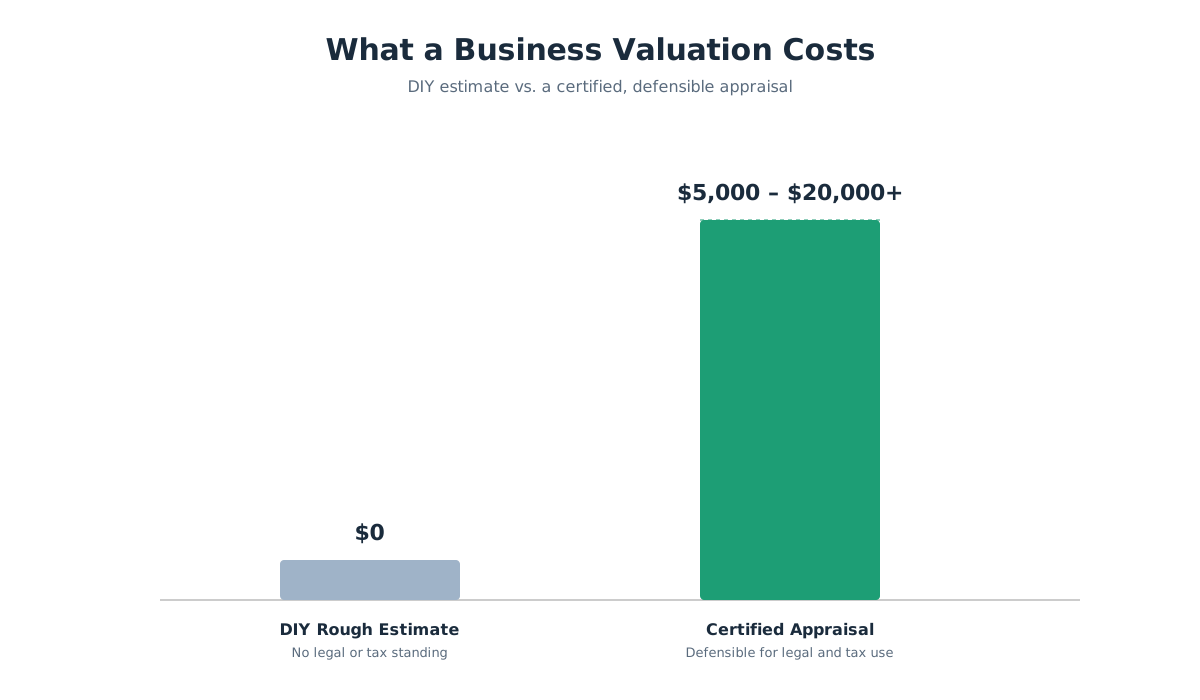
Business valuations for owners are not cheap. According to Jay Moulton, a business valuation expert, a certified, comprehensive appraisal generally requires a financial investment starting anywhere from $5,000 to over $20,000 depending on the company’s size and complexity. This cost covers extensive work, including deep financial statement normalization, management interviews, and rigorous market analysis to build a defensible number. While many owners are tempted to calculate a rough estimation themselves for free, a DIY figure completely falls apart if the valuation is needed for regulatory or legal reasons.
What Could Be Destroying Your Business’s Value
Several factors can silently reduce your company’s assessed worth, and many are directly tied to the elements a valuation examines. A declining profitability trend, a weakening market position, or an increase in liabilities will all lower the income approach projection. Conversely, having revenue concentrated in too few clients introduces a severe customer concentration risk that will compress your valuation across all methods.
If your industry or region has few recent comparable sales, the market approach may yield an undervalued estimate because buyers lack data to justify a higher price. For asset-heavy businesses, ignoring the depreciation of key equipment or failing to maintain intangible assets such as brand reputation or customer relationships can shrink the net asset figure. If your business relies too heavily on your day-to-day presence, high owner dependency business valuation issues will drag down your multiples. To defend your equity long before an exit, it is critical to identify and neutralize the key factors why buyers discount purchase price during due diligence.
Additionally, using the wrong valuation standard for a specific purpose, for instance, applying fair market value when investment value is more appropriate for a strategic buyer, can lead to a number that underestimates value.
In Moulton’s opinion, business valuations for owners are fine, but the only sure way to determine the value of a company is to conduct a discrete auction of the company. Of course, selling the company now may not be the owner’s objective!
When Should You Get a Business Valuation?
Timing matters when protecting your life’s work. A professional business valuation for owners is not a static document; it is a dynamic tool triggered by specific milestones. While an internal estimate helps track year-over-year progress, a certified business valuation for owners becomes legally and financially mandatory during the following corporate transitions:
- Mergers and Acquisitions: You need a precise business valuation for owners to establish a baseline for buy-sell agreements or strategic mergers.
- Tax Planning: Government agencies require a formal business valuation for owners to legally back your estate tax, gift tax, or succession planning files.
- Litigation and Disputes: Shareholder conflicts and divorce proceedings demand an objective business valuation for owners to protect your personal equity.
- Exit and Retirement: A final business valuation for owners ensures you do not leave money on the table when executing a partner buyout or selling the enterprise. Utilizing an exit prep checklist business owners follow is vital for structuring this multi-year journey to market.
Even if an exit is not imminent, securing an annual business valuation for owners alerts you to value erosion before it turns into a corporate crisis. If you are weighing your options, our AI Business Advisor can help you think through next steps.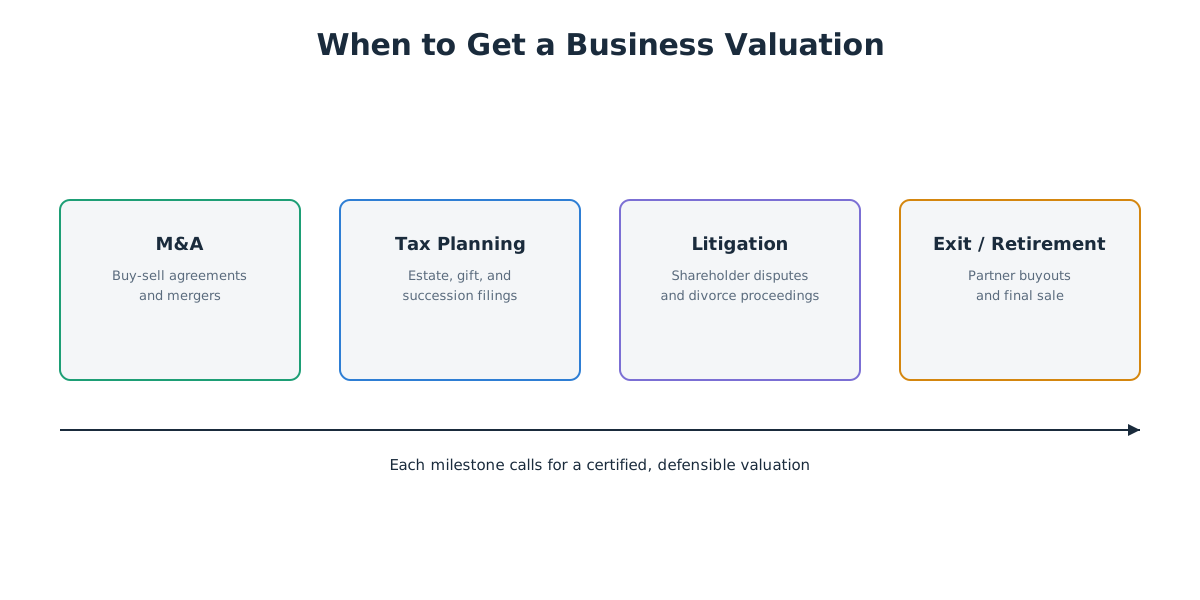
A valuation number is a starting point, not an answer. For the full picture on what erodes that number before a buyer sees it, and what retirement looks like when the business is the plan, see Build and Realize Value.
Frequently Asked Questions
What is the difference between fair market value and investment value?
Fair market value assumes a hypothetical buyer and seller with no special motivations. Investment value reflects the worth to a specific buyer who can achieve unique synergies or cost savings. A business may have a higher investment value to a strategic acquirer than its fair market value on the open market.
Can I do a rough valuation myself?
Yes. Owners can prepare informal estimates at no cost by using basic revenue or earnings multiples from public industry data, or by calculating net asset value. These rough figures help track changes over time, but they lack the rigor and defensibility needed for legal, tax, or transaction purposes.
Which valuation method is best for my business?
No single method is universally superior. Ultimately, you get what you negotiate.
The income approach suits profitable, stable businesses. The market approach works well when comparable sales are available. The asset-based method fits asset-heavy or distressed companies. Most professional appraisals use a combination of methods to cross-check results and provide a balanced conclusion.
Understanding what your business is really worth, and what could be holding its value back, is not a luxury reserved for the day you decide to sell. It is an ongoing strategic tool that protects the value you have built and can guide decisions that shape your company’s future. If you have never had a formal valuation, consider whether the cost of not knowing outweighs the cost of finding out.
 No Credit Card Required For Trial