

Raising prices is one of the most anxiety-inducing moves a business owner can make. The fear that customers will walk away often keeps prices artificially low, leaving money on the table, especially when revenue is already concentrated among a small number of customers, a vulnerability known as customer concentration. But the economic reality is more nuanced. Customers do not leave because a price goes up. They leave when they feel blindsided or when the value they receive no longer matches the cost. An economics-based approach helps you raise prices in a way that preserves trust and strengthens your customer relationships.
The Psychology of Price Increases
Customers react to price changes based on perception, not just math. A sudden or unexplained increase can feel like a betrayal, even if the new price is objectively fair. According to Growth Association, customers leave when they do not understand the value or when the increase surprises them. The key is to eliminate the surprise and reinforce the value. When customers understand why prices are moving and can see what they get in return, retention improves dramatically.
Several tactics can prevent customers from feeling ambushed. Repackaging your offerings to show more value, increasing minimum purchase amounts, and adjusting prices based on urgency or complexity are all moves that customers tend to accept without pushback. These strategies shift the focus away from a simple number increase and toward a new structure that makes sense.
Prepare Your Strategy: Incremental, Not Sweeping
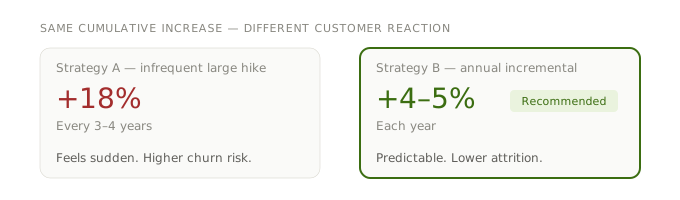
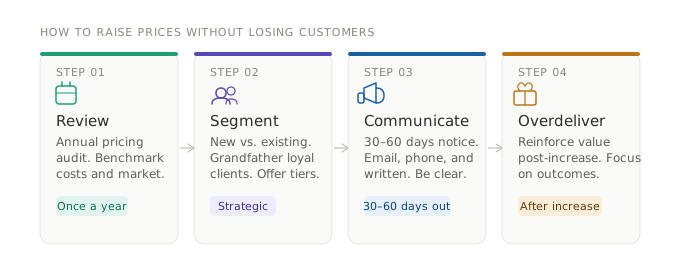
An economics-based pricing strategy avoids large, infrequent jumps. Xero, a reputable accounting software provider, advises implementing regular price reviews at least once a year. Small, incremental increases of 3–5 percent are far easier for customers to absorb than a double-digit hike every few years. This approach aligns with basic behavioral economics: people dislike losses more than they appreciate gains, so a small, predictable change feels much less painful than an occasional large one. Building strong pricing power business fundamentals makes these incremental increases easier to sustain over time.
GoDaddy adds that you should raise prices strategically, not universally. You might increase rates only for new customers, or only for high-demand services, while grandfathering existing clients at their current rates for a set period. This segmented approach rewards loyalty and gives price-sensitive customers time to adjust. Offering tiered or flexible options also keeps those who would otherwise leave. When price-sensitive clients see a lower-priced tier that still provides core benefits, they are far more likely to stay.
Communicate with Transparency and Timing
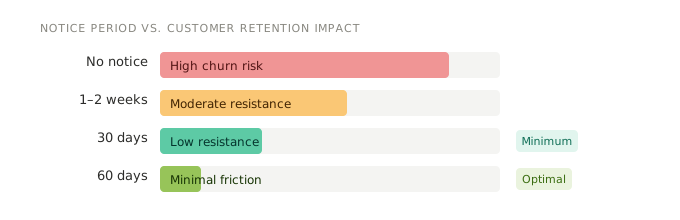
Clear, early communication is the single most effective tool for retaining customers during a price change. Xero recommends giving 30 to 60 days of advance notice. GoDaddy also advises 30 days. Use multiple communication channels: email, phone calls for key accounts, and written notices. In a physical retail setting, small in-store signs or notes can help.
When you deliver the message, include both the percentage increase and the exact dollar amount. Customers think in dollars, so showing the actual monetary change removes ambiguity. Explain the reason for the increase: rising costs, service improvements, or market conditions. If it has been several years since the last price change, mention that. Highlight the ongoing value and benefits customers receive, and use gentle language such as “pricing adjustment” or “rate update” instead of “price hike.” GoDaddy stresses that transparency builds trust, and that customers are more willing to accept a change when they feel they are getting more in return, even if the additional value costs little to provide.
Repackage and Bundle to Shift Perception
Rather than raising the price on a single high-traffic item, bundle it with related accessories or services. This approach, makes the overall price feel justified by the addition of complementary products. Price anchoring is another effective tactic: offer a higher-priced premium option so that your middle-tier offering looks like the best value. Without structural pricing discipline, gains made here are quickly offset by margin erosion causes that are hiding in overhead and cost creep. When customers perceive a bargain relative to a more expensive alternative, they accept the increase more readily.
Businesses can also repackage their offerings altogether. Changing the structure of your product or service lineup gives you a reason to adjust pricing without appearing to simply charge more for the same thing. You can increase minimum commitments, adjust for urgency (charging more for rush orders), or add complexity-based pricing. These moves are seen as fair because they are tied to a tangible change in what the customer receives.
You can also raise prices without losing customers when you introduce something new, such as a system upgrade or a service improvement. Customers are more receptive to a price increase when it coincides with a visible enhancement. The novelty reduces the sting of the higher cost because the customer sees immediate, demonstrable value.
Overdeliver After the Increase
Once the new prices are in place, the work is not done. GoDaddy recommends overdelivering on value to reduce buyer’s remorse. Before reversing any increase through concessions, understand the full cost. The economics of discounting consistently undermines the margin gains you worked to achieve. Small gestures like handwritten thank-you notes or unexpected gifts can go a long way toward cementing the relationship. When customers feel appreciated and see that you are committed to providing exceptional service, they are far less likely to question the price. Overdelivering reinforces the message that the increase was justified and that you value their business.
Shifting your marketing focus from price to outcome also helps. Instead of leading with cost, emphasize the results customers achieve. When your messaging centers on the transformation or solution you provide, price becomes a secondary consideration. Customers who are focused on outcomes are less price-sensitive because they are paying for a result, not a commodity.
Pricing discipline is one lever in a larger system. If margin, revenue concentration, or growth pace are also live questions for you right now, the full playbook is in Grow Profits.
Frequently Asked Questions
How much can I raise prices without losing customers?
An incremental increase of 3 to 5 percent is often easier for customers to accept than a large jump, according to Xero. Smaller, regular adjustments made annually tend to produce less resistance than infrequent, double-digit hikes. The exact threshold depends on your industry and customer base, so test small increases first and monitor retention.
How much notice should I give customers before a price increase?
Xero recommends 30 to 60 days of advance notice. GoDaddy also advises a minimum of 30 days. Use multiple channels such as email, phone calls, and written notices to ensure the message reaches every customer. Personal contact is especially important for key accounts that generate significant revenue.
Will raising prices definitely lose some customers?
Growth Association states that customers leave because they do not understand the value or feel surprised, not because of the increase itself. However, GoDaddy implies some loss is possible by recommending grandfathering and tiered options to retain price-sensitive customers. A well-executed price increase with clear communication and reinforced value can minimize attrition.
Should I raise prices for all customers at once?
No. GoDaddy advises a strategic approach: raise prices only for new customers, or only for high-demand services, while locking in current rates for loyal clients. This preserves goodwill and gives price-sensitive customers time to adjust. Tiered options also allow you to keep customers who are unwilling to pay the higher price by offering a lower-tier alternative.
What if customers complain after the increase?
Listen to their concerns and reiterate the value they receive. Explain the reason for the increase honestly, and if possible, offer a transitional option such as a short-term rate lock or a smaller adjustment. Overdelivering after the increase with extra service or small gestures can also help rebuild goodwill, as noted by GoDaddy.
Raising prices without losing customers is not about avoiding the conversation. It is about preparing the ground, communicating clearly, and ensuring that every customer feels the value has actually increased. By using incremental changes, strategic segmentation, transparent messaging, and a focus on outcomes, business owners can adjust pricing in a way that strengthens their bottom line and their customer relationships at the same time. Every point of margin you protect through disciplined pricing compounds directly into the business valuation for owners at exit.
 No Credit Card Required For Trial