

Pricing power means that a business can raise prices without losing customers. Every pricing power business strategy starts with this idea. When you have pricing power, you can pass higher costs to customers, protect your margins during inflation, and grow revenue without adding volume.Warren Buffett called pricing power the single most important factor in evaluating a business. For businesses planning an exit, it is also a primary driver of business valuation for owners. Buyers pay a premium for companies that can defend their margins. In a competitive market, building it is not optional. It is essential.
What Is Pricing Power in Business?
Pricing power exists when you can raise prices and still keep most of your customers. Demand is relatively inelastic. That is, customers do not cut back significantly when prices go up. Customers behave this way when they see your product as unique, essential, clearly better than alternatives or just a small component of their costs.
Company-specific pricing power is more valuable than industry-wide pricing power. It lets you outperform competitors even in a tough market.
Scarcity also creates pricing power. A business that controls a rare input or a patented technology can set prices with less worry about rivals. Dynamic pricing (charging more during peak demand) is another tool used in the hospitality, transportation, and travel industries. But pricing power is not permanent. It weakens when competitors catch up or substitutes appear.
Why Pricing Power Matters for Your Business
Pricing power drives profitability directly. When costs rise, a pricing power business can raise prices and hold its margins. Without it, you absorb higher costs or lose customers when you try to pass them on. That is margin compression and it hurts.
Gross margin stability is the clearest signal of pricing power. If your margins stay steady while input costs fluctuate, you have a built-in buffer against economic shocks.
Revenue growth without volume growth is another strong signal. If your top line grows due to higher prices, not because you sold more units, but because customers are accepting your price increases. That kind of growth is more sustainable. It does not require new customers or more production capacity. It is why Warren Buffett treats pricing power as the foundation of a durable business.
How to Measure Pricing Power
Do not rely on revenue numbers alone. Use these metrics:
Gross margin stability. Track your gross margin across several quarters, especially when costs are rising. Stable margins under pressure indicate strong pricing power.
Revenue growth vs. volume growth. If revenue rises while units sold stay flat or dip slightly, you have raised prices without losing significant volume.
Peer comparison. A business that consistently outperforms its industry in passing on cost increases has a durable edge. Analysts watch this when assessing recession resilience.
Brand strength alone does not guarantee pricing power. But brands that build genuine customer loyalty, such as Starbucks and Coca-Cola, report loyalty rates above 67%, according to McKinsey, and have a real advantage when raising prices.
Factors That Build Pricing Power in Business
Several structural factors help you build and hold pricing power. Each one makes it less likely that customers leave when prices rise.
Brand strength and customer loyalty.
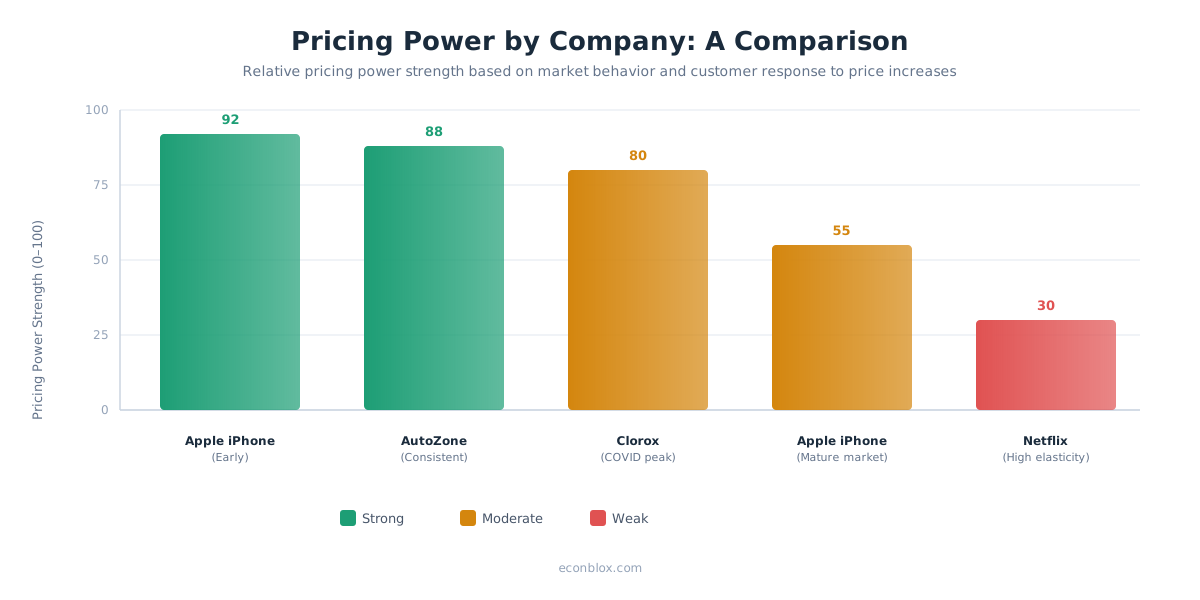
Trusted brands make customers less price-sensitive. Clorox raised prices during COVID-19 without losing customers because demand surged and the brand was seen as essential. Apple‘s original iPhone commanded premium pricing because it was the only smartphone with a robust app ecosystem.
Switching costs. When moving to a competitor takes significant time, money, or effort, customers accept price increases. Software platforms that require data migration or retraining are the classic example. Understanding your own competitive strategy helps identify where you can build these barriers.
Network effects. A product that gets more valuable as more people use it is hard to leave. Social media platforms and payment networks rely on this dynamic.
Limited substitutes. AutoZone has strong pricing power because auto parts are urgent and necessary. When your car breaks down, you buy the part. There is no real alternative.
Regulatory barriers. Patents, licenses, and government regulations limit competition. The protected business can charge more without fear of being undercut.
Pricing Power Business Examples
Apple’s iPhone launched with extraordinary pricing power. The product was new, and no competitor had a comparable app ecosystem. As Android and other smartphones matured, that edge eroded. Apple responded with cheaper models. It could no longer raise prices as freely.
Netflix showed what weak pricing power looks like. Each time it raised subscription fees, cancellations increased noticeably. Customers had options, including Disney+ and HBO Max and they used them.
AutoZone sits at the other end. Auto parts have inelastic demand. A price increase does not stop customers from buying replacement brakes or alternators. The need is immediate and the alternatives are limited.
Clorox during COVID-19 is a useful case of temporary pricing power. Demand surged and the brand was trusted. Clorox raised prices and held its customers. When demand normalized, that window closed.
| Company | Pricing Power Strength | Key Factor | Outcome Under Price Increase |
|---|---|---|---|
| Apple (initial iPhone) | High | Unique product, app ecosystem | Demand sustained; premium pricing held |
| Apple (later years) | Diminished | Competitors caught up | Introduced cheaper models; lost some pricing power |
| AutoZone | High | Inelastic demand for auto parts | Customers paid higher prices |
| Netflix | Lower | Higher price elasticity | Cancellations increased |
| Clorox (COVID-19) | High (temporary) | Demand surge, brand loyalty | Raised prices without losing customers |
How to Build Pricing Power in Your Business
Building pricing power takes deliberate, long-term effort. Here is where to focus.
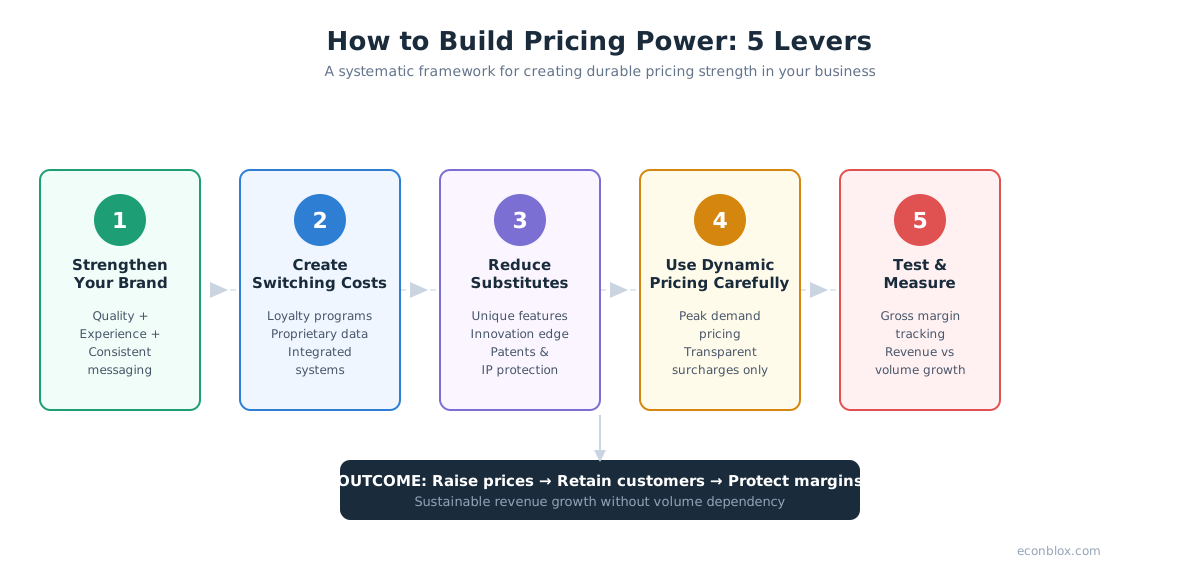
Strengthen your brand. Invest in product quality, customer experience, and consistent messaging. When customers trust you, price becomes a secondary concern.
Create switching costs. Use loyalty programs, proprietary data, integrated systems, or subscription models. Make it inconvenient to leave.
Reduce substitutes. Develop products or services with few direct alternatives. Innovate to maintain a technological or operational edge over competitors.
Use dynamic pricing carefully. Charge more during peak demand, but do it transparently. Hidden or aggressive surge pricing damages trust and erodes the loyalty you need. Explore our pricing strategy prompts to pressure-test your approach with AI.
Test and measure. Monitor your gross margins and revenue per unit closely. If you see margin compression, test a small price increase and watch the volume response. Small gains compound over time.
Pricing power is never guaranteed. Competitors will try to erode it. Market conditions shift. Review the factors supporting your pricing power regularly and adjust your strategy.
Frequently Asked Questions
What is pricing power in business?
Pricing power is the ability to raise prices without losing customers or seeing demand fall. It shows how essential or differentiated your product is. A pricing power business can protect margins during inflation and grow revenue without relying on volume increases.
How do you measure a company’s pricing power?
Look at gross margin stability during periods of rising costs. Also compare revenue growth to volume growth. If revenue rises while units sold stay flat, you are raising prices successfully. Comparing these metrics to industry peers shows your relative strength.
Does a strong brand automatically give you pricing power?
No. Brand strength helps, but it is not enough on its own. You also need switching costs, limited substitutes, or network effects. Customers will leave a strong brand if a competitor offers clearly better value. Loyalty and perceived differentiation are what actually support pricing power.
Can pricing power change over time?
Yes. Apple’s initial iPhone pricing power was high and then diminished as competitors matured. Pricing power requires continuous effort. You need to keep innovating and reinforcing the factors that support it, brand loyalty, switching costs, and product uniqueness.
Pricing power is a dynamic capability, not a fixed asset. Build it deliberately. Measure it consistently. Protect it actively. In a competitive market, it is one of the most reliable paths to sustainable profitability. Without it, businesses become vulnerable to the compounding effects of margin erosion causes that quietly destroy profitability over time. Your pricing leverage also weakens considerably when revenue has high customer concentration risk, where a single dominant customer can dictate terms that erode your pricing position.
 No Credit Card Required For Trial