

Relying on a single large client or a narrow customer segment can feel like steady income, but it also leaves a business exposed. A sudden loss of that client or a downturn in that market can cause a sharp drop in revenue. Diversifying your customer base creates a buffer against these shocks, but many business owners worry that spreading efforts across new segments will dilute their focus or reduce profitability. With the right approach, you can reduce your customer concentration risk and maintain, or even increase, your revenue.
The Economic Case for Customer Diversification
A broad customer portfolio leads to more stable revenue streams, higher profit margins, and improved long-term financial sustainability, according to business advisory sources. When income comes from multiple clients and multiple sources beyond your primary service, the business is less vulnerable to the loss of any one account. This stability is attractive not only to you as the owner but also to potential buyers, since a concentrated customer base is one of the factors buyers use to discount a purchase price. Certified business brokers note that acquirers look for a customer base where no single client accounts for more than 10 percent of total sales. A concentrated customer base can therefore lower the sale price of your company.
Revenue diversification, which is the practice of generating income from multiple sources rather than relying on a single product, customer segment, or market, reduces risk by spreading it across different income streams. It also helps businesses compete in multiple markets. The financial benefits extend beyond risk reduction: diversifying revenue can increase cash flow, improve customer retention, and lower customer acquisition costs. These outcomes support the goal of protecting and growing revenue while broadening your client base.
Recognizing Customer Concentration Risk
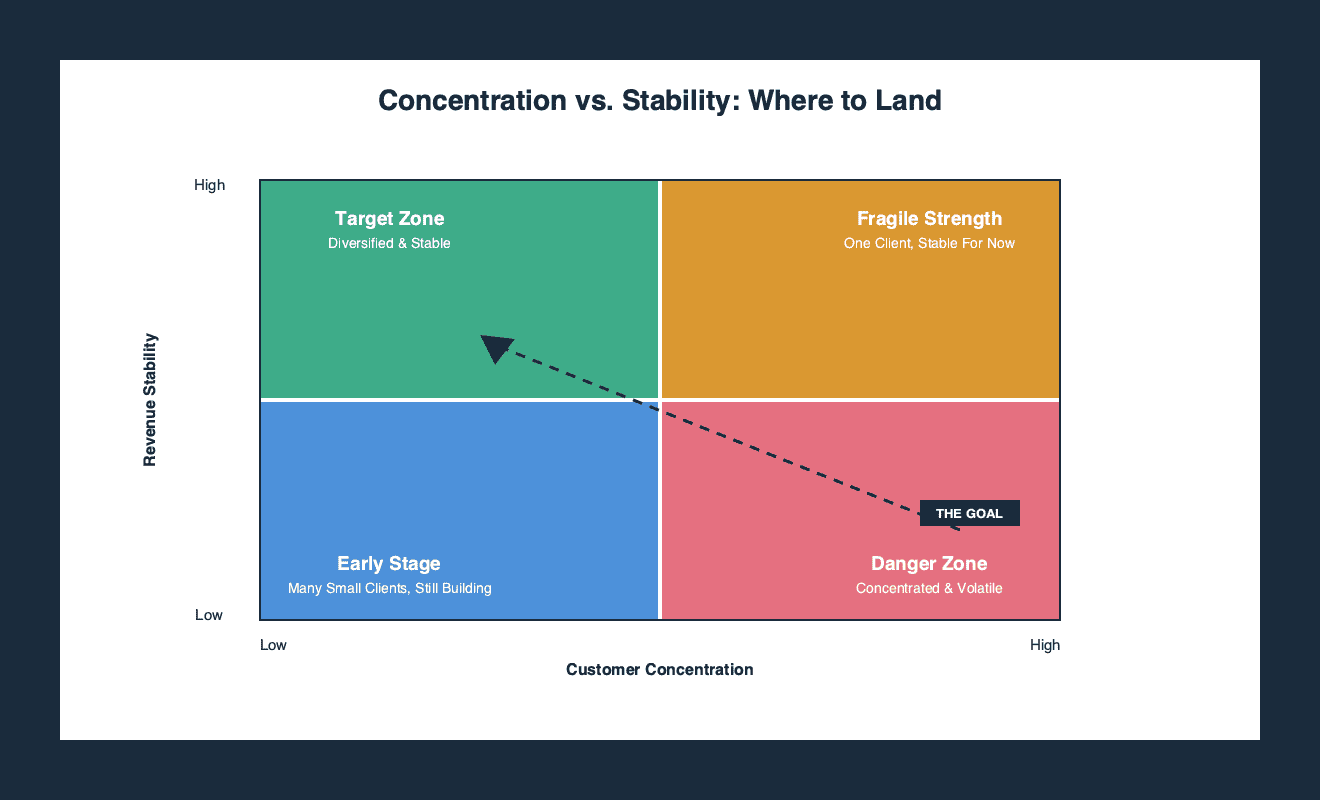
How do you know if your customer base is too concentrated? There are two commonly cited thresholds. From a business-buyer perspective, the ideal is that no single client represents more than 10 percent of total sales. For operational risk, a different benchmark is often used: when one client accounts for more than 20 to 30 percent of total revenue, it is time to take action on diversification of customer concentration risk. These thresholds are not regulatory rules but are based on professional experience and buyer preferences. If your business sits above either number, you have a concentration risk that deserves attention.
Regular evaluation of your customer base is critical. It is recommended to assess your client mix every six months and look for opportunities to diversify. This periodic review helps you spot emerging dependency on a single customer or market before it becomes a serious threat. Even if you are below the 10 percent or 20 percent thresholds today, shifts in the economy or in your customer’s industry could change that quickly.
How to Diversify Without Sacrificing Revenue
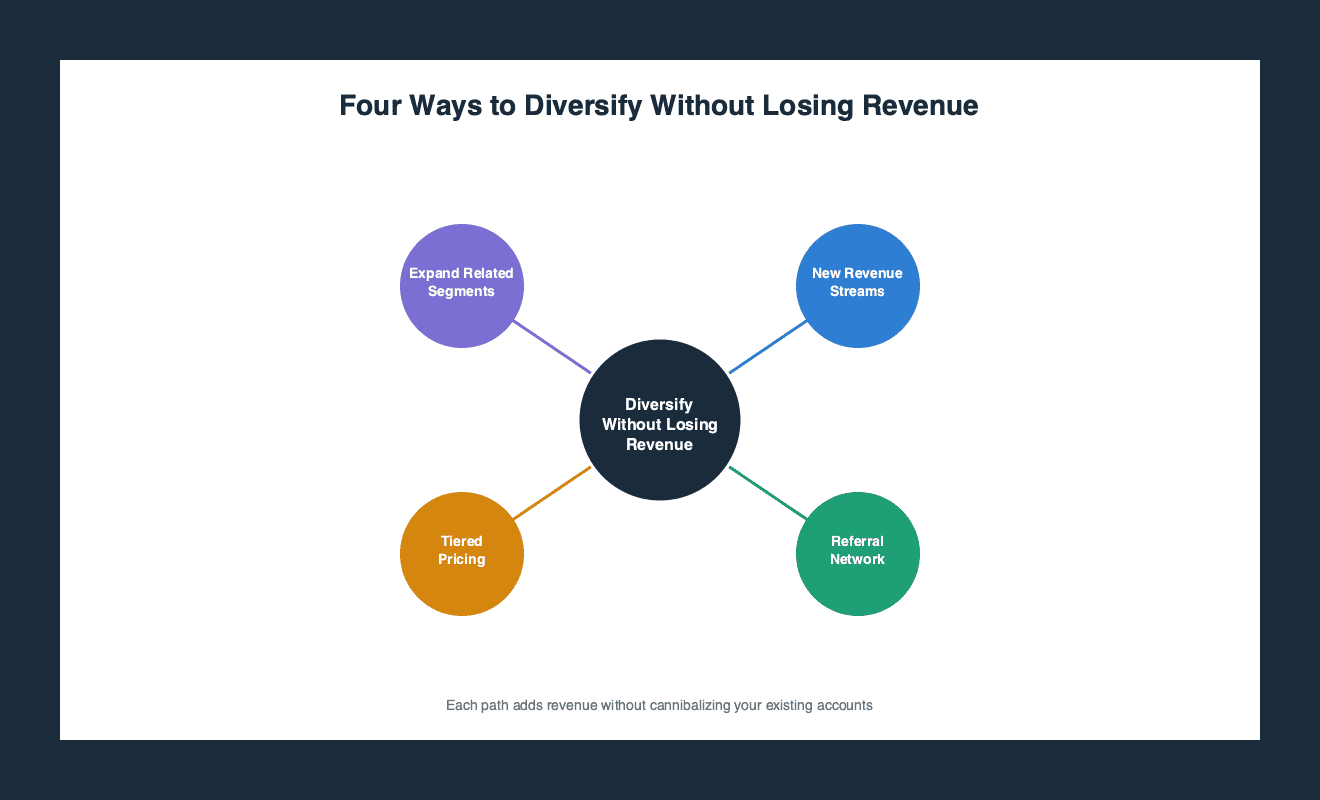
Many business owners hesitate to diversify because they fear that serving new customers will come at the cost of their existing low-risk, high-margin accounts. The key is to pursue diversification in ways that complement your current revenue rather than replace it. This means expanding into adjacent customer segments, adding services that your current market also values, or developing recurring revenue models that smooth out income swings.
Expand into Related Customer Segments
Look for customers who have similar needs to your best clients but operate in different industries or geographic areas. Your existing product or service likely works for them with only minor adjustments. Because you already know how to serve these types of customers, the acquisition cost is lower and the retraining time is minimal. This approach preserves your margins while spreading revenue across a broader base.
Develop Additional Revenue Streams
Revenue diversification is not limited to winning new clients. It can also mean offering new services, products, or pricing models to your existing customer base. For example, a subscription model, maintenance packages, or consulting add-ons can create recurring income from the same set of clients. Because these additional streams come from people who already trust you, the retention rates are typically high and the acquisition cost is negligible. This directly supports the goal of improving customer retention and reducing acquisition costs.
Build a Referral Network with Complementary Businesses
Partnering with companies that serve a different but adjacent audience can bring you warm introductions without heavy marketing spend. These partners refer clients to you, and you refer clients to them. Each referral adds a new name to your customer list without cannibalizing your existing business. Over time, you build a diversified base that grows organically and profitably.
Use Tiered Pricing to Protect Margins
When you move into new customer segments, you may encounter price sensitivity that is different from your core clients. A tiered pricing structure allows you to serve budget-conscious buyers with a simplified version of your offering while maintaining premium pricing power for your high-value clients. This way you capture revenue from a wider audience without discounting your flagship product or service. The result is a broader revenue base that does not drag down overall profitability.
Measuring the Impact on Revenue Stability
Once you start diversifying, you need to track how it affects your financial performance. The most direct metric is the percentage of revenue that comes from your largest client. If that number is above 20 percent, you have a target to reduce. But you should also monitor profit margins by customer segment. A diversified base that includes lower-margin accounts can hold back overall profitability if not managed carefully. The goal is to maintain or improve your average margin per client while lowering concentration. Tools like Econblox’s AI-powered business advisor can help track these metrics on an ongoing basis rather than relying on the six-month review alone.
Another metric is customer retention rate. As you add new customers, your overall retention may initially dip if the new segments have higher churn. Over time, the diversification itself should stabilize retention because you are not dependent on a single account. Track retention every six months, as part of your regular customer evaluation cycle. If you see retention improving while concentration is decreasing, you are on the right path.
Common Pitfalls and How to Avoid Them
One common mistake is pursuing any new customer segment without regard for fit or profitability. A broad customer base is valuable only if each segment is profitable on its own. Avoid the temptation to chase volume at the expense of margin. Another risk is neglecting your existing large clients while you focus on new ones. Since those large clients still represent a significant portion of revenue, you must continue serving them well even as you reduce their proportional share.
Finally, do not wait until a crisis forces you to diversify. The best time to broaden your customer base is when business is strong and you have the resources to invest in new segments. Diversifying during a downturn is harder because cash flow is tight and customers are harder to win. Regular six-month reviews help you time your diversification efforts when you have the financial flexibility to absorb any short-term costs.
Frequently Asked Questions
What is customer concentration risk?
Customer concentration risk is the vulnerability that comes from relying too heavily on a single client or a small group of clients for a large portion of your revenue. If that client leaves or cuts spending, the financial impact can be severe. Experts recommend that no single client exceed 20 to 30 percent of total revenue, and potential buyers often prefer that no account surpasses 10 percent.
Can I diversify my customer base without lowering prices?
Yes. You can serve new customer segments at price points that fit their willingness to pay without discounting your core offering. Tiered pricing, value-added packages, and subscription models allow you to capture revenue from different segments while protecting margins on your primary service. The key is to avoid a one-size-fits-all pricing strategy.
How often should I review my customer base for diversification?
It is recommended to evaluate your customer base every six months. This regular check helps you spot emerging concentration risks and identify opportunities to add new clients or revenue streams. Periodic reviews also keep diversification as a deliberate, ongoing business activity rather than a reactive measure.
What is the difference between customer diversification and revenue diversification?
Customer diversification focuses on broadening the number of clients you serve, while revenue diversification is the broader practice of generating income from multiple sources, including different products, services, markets, or business models. Both concepts overlap: adding new customer segments often leads to revenue streams that are less correlated with your original business.
How does diversification affect the value of my business?
A diversified customer base is generally more attractive to buyers because it signals lower risk and more stable cash flow. Business brokers report that acquirers look for a base where no single client accounts for more than 10 percent of sales. Reducing concentration below that threshold can increase the sale price and make your business easier to sell.
Diversifying your customer base is not an overnight project. It requires deliberate planning, periodic evaluation, and a willingness to test new segments. When done correctly, it reduces risk, increases cash flow, and builds a more resilient business. Start with the data you have today, set a target for reducing your largest client’s share of revenue, and take one small step this quarter toward adding a new income source. The stability you gain will more than offset any effort involved. Before launching any expansion campaigns, pinpoint your vulnerabilities by running a customer concentration audit. However, expanding too quickly into untested market segments can expose you to the growth trap business cash squeeze — diversification must be funded within capital constraints.
 No Credit Card Required For Trial