

For companies generating $10 million to $100 million in annual revenue, the decisions around how to deploy financial resources often determine whether the business accelerates or stalls. Capital allocation strategies for mid-market companies require a disciplined, economics-based approach that balances short-term needs with long-term value creation. This article examines the core principles and methods that senior management can use to allocate capital effectively, drawing on insights from financial research and industry practice.
What Is Capital Allocation?
Capital allocation refers to the strategic process of choosing how to distribute financial resources across different business functions, initiatives, and time horizons to achieve specific goals. It is the process of determining the most efficient investment strategy for an organization’s financial resources, with the goal of maximizing shareholder equity. Alternatively, it can be defined as the strategic deployment of financial resources to maximize long-term value creation.
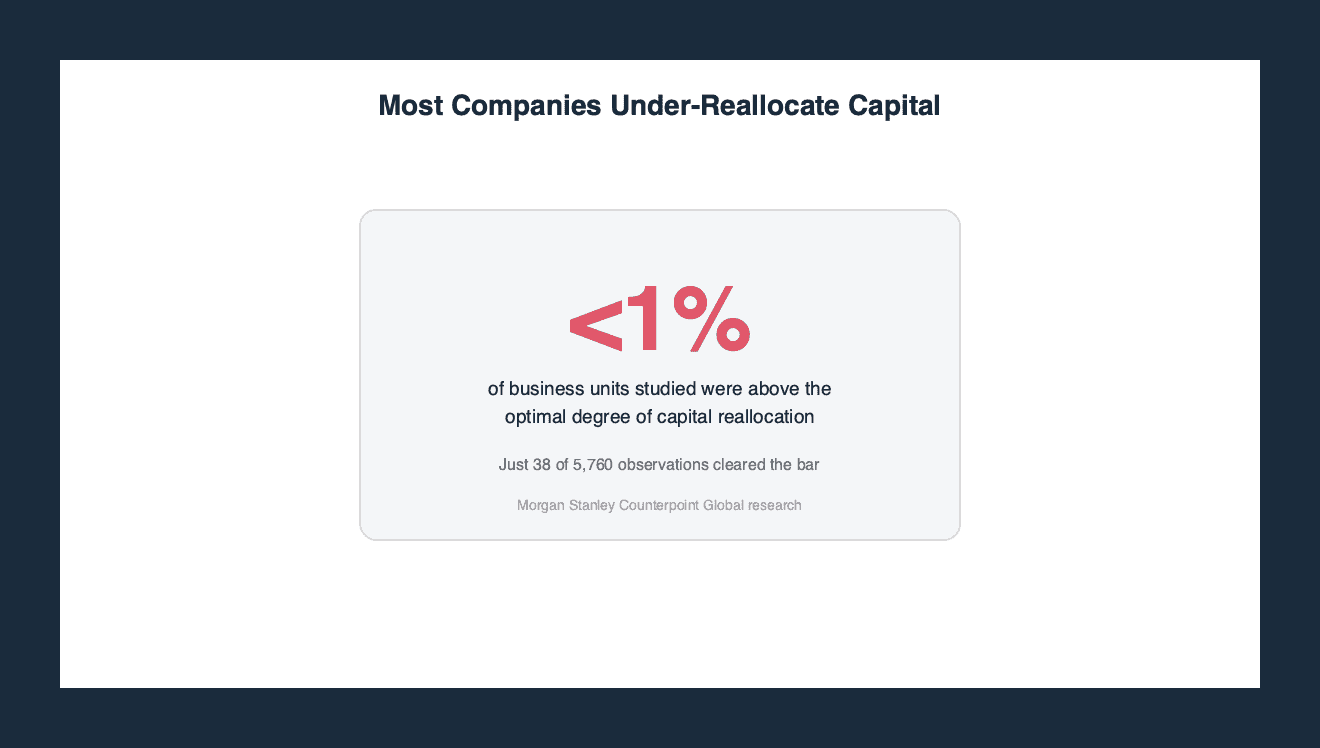
For mid-market companies, capital allocation is not a one-time exercise but an ongoing discipline. Every strong allocator knows that optimizing baseline working capital management mid-market metrics is the foundation of corporate liquidity before any excess cash can be strategically deployed. The primary job of senior management is to create value over the long term, and capital allocation plays a central role in that value creation. Yet research shows that most companies fall short. A Morgan Stanley Counterpoint Global study found that out of 5,760 observations, only 38 cases (less than 1%) were above the optimal degree of capital reallocation across business units. This suggests that the majority of firms could improve performance by re-allocating more capital, and companies that misallocate capital for too long are often the same ones that fall into the growth trap, adding resources faster than they can generate returns.
The Five Capital Allocation Methods
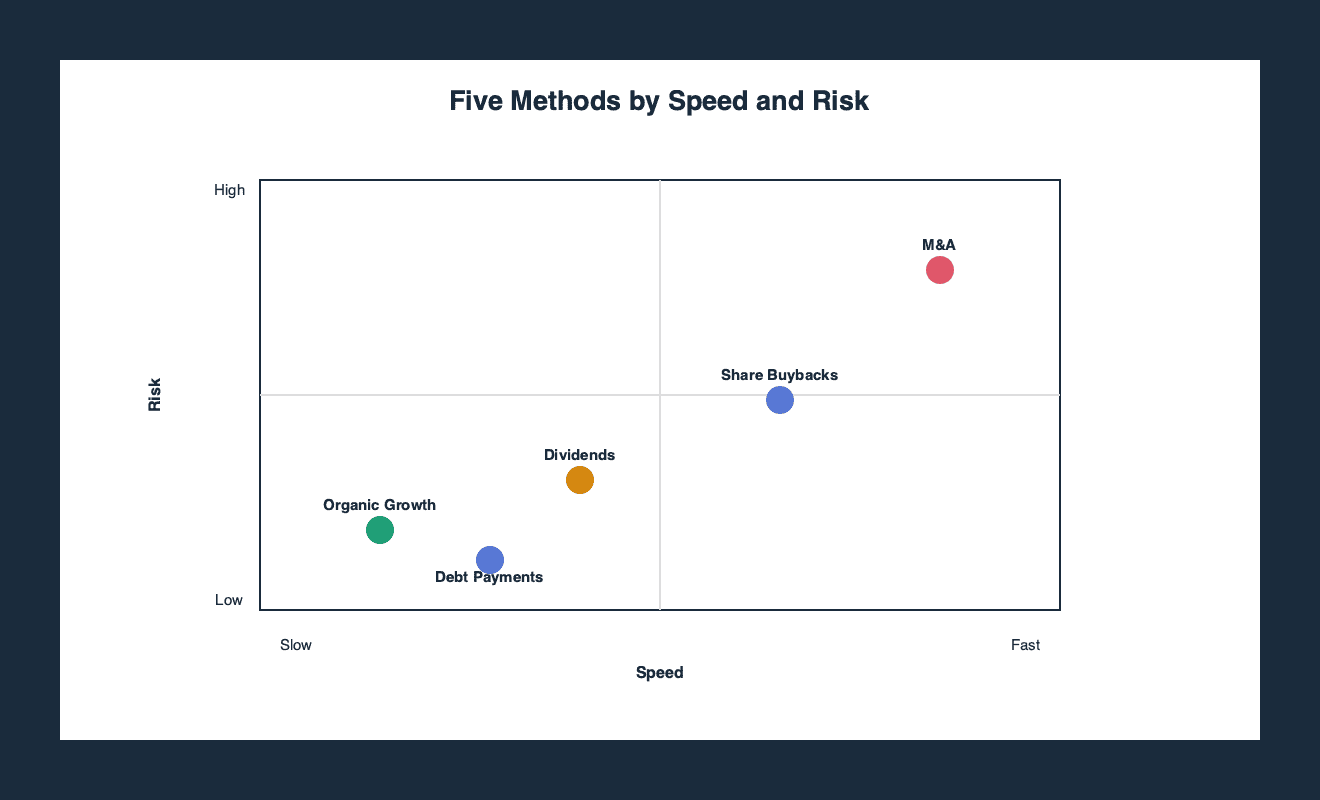
There are five primary capital allocation methods: organic growth, mergers and acquisitions, debt payments, dividend payments, and share buybacks. Each method carries distinct trade-offs in speed, risk, and impact on shareholder equity. Mid-market companies should evaluate these tactics based on their own unique situations.
Organic Growth
Organic growth involves investing internal resources into expanding existing operations, such as product development, sales and marketing, or geographic expansion. Enforcing strict internal ROI hurdles during organic expansions is your best operational defense against the overspending trap scaling business loop that quietly drains company cash reserves. This method is typically slower than acquisitions but carries less risk. For mid-market firms, organic growth often aligns with the ability to maintain operational control and preserve company culture. Capital allocated here might fund new product lines, hire additional sales staff, or open new locations.
Mergers and Acquisitions (M&A)
M&A allows a company to grow quickly by acquiring another business or merging with it. However, valuation challenges and integration risks can complicate outcomes. For mid-market companies, M&A can be a powerful tool when the target company is complementary in terms of products, customer base, or geographic reach. M&A offers rapid growth but requires careful valuation to avoid overpaying, since the same factors that make buyers discount a purchase price apply just as much when a mid-market company is the one doing the buying. In most cases, the price paid is less important than the strategic fit. Mid-market firms often rely on external advisors to navigate the due diligence process.
Debt Payments
Using capital to reduce debt delevers a company’s balance sheet and lowers interest expenses. For mid-market companies with significant leverage, debt repayment may be a priority as it reduces financial risk and frees up future cash flow. However, paying down debt also means forgoing investment in growth opportunities. The optimal level of debt varies by industry and company stability.
Dividend Payments
Dividends distribute a portion of profits to shareholders. For mature mid-market companies with consistent cash flows, dividends can signal financial health and attract income-focused investors. For founders running on a long-term business owner retirement pension model, these consistent distributions from stable capital deployment inside the business are functionally equivalent to private retirement planning. But paying dividends reduces the capital available for reinvestment. Mid-market firms that are still in a growth phase may prefer to retain earnings rather than pay dividends.
Share Buybacks
Share buybacks involve a company purchasing its own shares from the market, which can increase earnings per share and benefit remaining shareholders. This method is more common among publicly traded companies, but some privately held mid-market firms may use buybacks to consolidate ownership or provide liquidity to exiting shareholders. The trade-off is that buybacks use capital that could otherwise be allocated to growth projects.
Key Insights for Mid-Market Capital Allocation
The research pack offers several insights that are directly relevant to mid-market companies, even if they were originally derived from larger firms or private equity perspectives. Understanding these principles can help business owners avoid common pitfalls and make better capital deployment decisions.
Reallocation Is Critical
The Morgan Stanley research highlights that fewer than 1% of business units studied were above the optimal level of capital reallocation. For mid-market companies, this finding underscores the importance of regularly reviewing how capital is distributed across lines of business, products, or projects. Many mid-market firms grow organically by reinvesting profits into the same core operations, but fail to reallocate capital from underperforming areas to higher-opportunity areas. To maximize the yields on these shifts, management should rely on a structured better business decisions economics framework that relies on strict opportunity cost calculations rather than instinct.
The Valuation Quotient
Morgan Stanley also reports that the valuation quotient for U.S. companies averaged 10% from 1970 through 2024. The valuation quotient measures how important valuation is to overall shareholder value. While this metric is derived from public markets, it suggests that for mid-market private companies, there is great potential to create value through better capital allocation. When a company consistently invests in projects that exceed its cost of capital, shareholder equity increases over time. The wisdom of these compounding deployment decisions is precisely what builds a premium, highly defensible business valuation for owners that gets reflected in an EBITDA multiple at exit.
Mid-Market Companies Are Operationally Agile
Middle market companies are frequently more operationally agile, have lower leverage, and can drive expansion through product innovation, geographic reach, and operational efficiency.
These qualities suggest that mid-market companies can adapt their capital allocation strategies quickly. With lower leverage, they may have more borrowing capacity to fund strategic acquisitions or capital expenditures. Operational agility allows them to pivot capital toward promising initiatives without the bureaucracy of larger organizations. For example, a mid-market manufacturer might rapidly reallocate capital from a slow-growing product line to a new innovation with higher margins.
Practical Considerations for Mid-Market Leaders
Senior management at mid-market companies must weigh several factors when choosing among capital allocation methods. First, the company’s stage of growth matters. A rapidly expanding firm might prioritize organic growth and M&A, while a mature firm with stable cash flows might focus on dividends or debt reduction. Second, the industry context influences which methods are most effective. Companies in capital-intensive industries may need to allocate more toward maintenance and equipment, while service-oriented firms might invest more in talent.
Third, risk tolerance plays a role. Organic growth is generally less risky than acquisitions, but it is slower. Debt repayment reduces risk but also reduces potential returns. Each method has trade-offs in speed, risk, and impact on shareholder equity. Mid-market leaders should evaluate these trade-offs against their company’s strategic goals and financial position.
Building a Capital Allocation Framework
To move beyond ad hoc decision-making, mid-market companies can adopt a structured framework. Start by establishing clear criteria for evaluating investment opportunities, such as expected return on invested capital, payback period, and strategic fit. Next, regularly review the performance of existing capital deployments and reallocate funds from underperforming areas to those with higher potential.
Additionally, consider setting aside a portion of capital for opportunistic investments. Mid-market companies that maintain financial flexibility can seize M&A targets, fund unexpected growth projects, or weather economic downturns without distress.
Finally, document each capital allocation decision and track its outcomes. Tools like Econblox’s AI-powered business advisor make it easy to keep that record as you go. Over time, this process builds institutional knowledge about which types of investments generate the best returns. It also makes it easier to explain capital allocation choices to stakeholders, whether they are board members, investors, or lenders.
Frequently Asked Questions
What is the most important capital allocation method for mid-market companies?
No single method works for every company. The choice depends on the firm’s growth stage, industry, risk tolerance, and financial condition. Many mid-market companies benefit from a mix of organic growth and selective acquisitions, while maintaining adequate debt levels to preserve flexibility.
How often should a mid-market company review its capital allocation strategy?
Experts recommend at least an annual review, but more frequent reviews, such as quarterly, can help identify underperforming areas sooner. Given that research shows most companies could improve by increasing reallocation, regular evaluation is important.
Should a mid-market company pay dividends or use share buybacks?
Dividends and buybacks are more common among mature, profitable companies with predictable cash flows. Mid-market firms still in growth phases typically retain earnings to fund expansion. However, if a company has excess capital and limited reinvestment opportunities, dividends or buybacks may be appropriate.
Capital allocation is a continuous process that requires both discipline and flexibility. For companies with revenues of $10 million to $100 million, the decisions made today will shape their competitive position and financial health for years to come. By understanding the five allocation methods and applying their own industry insights, business owners can create and implement a strategy that maximizes long-term value.
 No Credit Card Required For Trial