

Margin erosion occurs when costs increase faster than prices, cutting into revenue. It is a gradual process that often goes unnoticed until financial reports show a steady decline in profitability. A single quarter of shrinking margins might seem manageable. But persistent erosion can undermine an entire business. Understanding the margin erosion causes at play is the first step toward protecting your bottom line.
The Eight Structural Causes of Margin Erosion
One taxonomy of margin erosion causes identifies eight distinct structural factors. Each factor can operate independently, but in practice they often compound one another. Recognizing which of these forces are at work in your business is essential for effective intervention.
Input Cost Inflation Without Pass-Through
When the cost of raw materials, labor, or overhead rises, businesses must figure out how to raise prices without losing customers, or absorb the increase. If competitors do not raise prices or if customers resist, the business may choose not to pass on the full cost. The result is a direct squeeze on margins. Input cost inflation is one of the most common margin erosion causes. It is especially widespread in manufacturing and distribution where material costs can be volatile. Cultivating a resilient pricing power business is the most durable structural defense against this pressure, allowing you to pass rising costs to the market rather than absorbing them internally.
Price Erosion
Price erosion refers to a market-driven decline in average selling prices. This can happen when new competitors enter the market, when technology reduces production costs across an industry, or when demand softens. Price erosion is external and often beyond a single company’s control. Distinguish price erosion from pricing erosion. Pricing erosion results from internal failures in pricing discipline such as excessive discounting or inconsistent pricing policies. Understanding the economics of discounting helps you apply a rational framework before cutting prices rather than reacting under pressure.
Product Mix Shift
When customers buy more low-margin products and fewer high-margin ones, the overall product mix shifts downward. This can happen even if total sales revenue remains stable. A product mix shift is a subtle margin erosion cause because it does not show up in per-unit cost analysis. Only by tracking contribution margin by product line can a business detect this shift.
Customer Mix Shift
Similar to customer mix shift, a customer mix shift occurs when the proportion of sales to low-margin customers increases relative to high-margin customers. This can result from aggressive discounting to win new accounts or from losing high-value customers to competitors. Quarterly customer profitability reviews are necessary to identify which customers are dragging down margins.
Product Proliferation
Adding too many products or variations can spread resources thin and increase complexity costs. Each new SKU may cannibalize sales from existing products. It also adds its own design, production, inventory, and marketing costs. Product proliferation is a common margin erosion cause in companies that prioritize revenue growth over margin health. Annual product portfolio rationalization helps eliminate underperforming items. Companies that aggressively scale volume without addressing this underlying complexity fall directly into a hazardous growth trap business cycle where expansion ultimately destroys value rather than creating it.
Cost-to-Serve Creep
The cost to serve a customer may increase over time as customer demands grow or as service delivery becomes less efficient. This can include higher shipping costs, more frequent small orders, increased technical support, or customizations that were not priced into the original contract. Cost-to-serve creep is especially prevalent in professional services and B2B companies where client expectations evolve.
Overhead Growth
As businesses grow, overhead expenses such as rent, salaries, software subscriptions, and administrative costs tend to increase. If revenue growth does not keep pace, overhead as a percentage of revenue rises, squeezing margins. Overhead growth is one of the margin erosion causes that often results from hiring too quickly or investing in infrastructure before revenue justifies it.
Discount Discipline Failure
When sales teams are allowed to offer discounts without proper oversight, average selling prices decline. This is a form of pricing erosion. Discount discipline failure can become cultural, with customers expecting discounts and salespeople relying on them to close deals. Implementing strict discount approval processes and measuring discount effectiveness are critical to stopping this cause.
Other Categories of Margin Erosion Causes
Beyond the eight structural causes, researchers and practitioners have identified additional factors that can erode margins. These often overlap with the structural list but offer different perspectives for diagnosis.
Internal and External Theft
Theft, whether by employees, customers, or outsiders, directly reduces revenue and increases costs. Inventory shrinkage, cash theft, and fraud are margin erosion causes that can go undetected for long periods. Regular audits and security measures are necessary to minimize losses from theft.
Human Error and Policy Changes
Mistakes in invoicing, order processing, or production can lead to rework, credits, and wasted materials. Similarly, company policy changes that increase operational complexity or introduce new costs can erode margins. New legislation that imposes compliance costs or taxes can also have a direct impact on profitability.
Bad Estimates, Scope Creep, and Poor Resource Management
In project-based businesses such as professional services, construction, and consulting, margin erosion often stems from three interrelated problems. Bad estimates lead to underpricing projects. Scope creep adds work without additional compensation. Poor resource management results in inefficient allocation of labor and materials. When delivery costs exceed planned costs, profit diminishes even if revenue targets are met.
These margin erosion causes are particularly dangerous because they can be masked by seemingly successful project delivery. A project that comes in on time may still have low margins if the initial estimate was too low. Unplanned work that was not billed to the client is another frequent cause.
How to Identify Margin Erosion Causes in Your Business
Given the variety of potential margin erosion causes, systematic monitoring is essential. Companies that rely on annual budget reviews often miss early warning signs. Instead, experts recommend continuous monitoring at multiple levels of the business.
Monthly contribution margin trending allows management to see how margins are evolving by product, customer, and channel. Quarterly customer profitability reviews reveal shifts in customer mix and cost-to-serve trends. Annual product portfolio rationalization helps eliminate products that are dragging down overall margins.
Accurate cost estimating is another critical tool. Common calculation errors include product mix distortion, where average costs are applied across a diverse product line, overhead allocation errors that misassign fixed costs, and timing mismatches between revenue recognition and expense recognition. Addressing these errors can immediately improve margin visibility.
Technology solutions can also help. Automated pricing tools, cost analytics platforms, and ERP systems with margin tracking capabilities make it easier to detect erosion in real time. However, technology alone is not enough; the underlying causes must be understood and addressed at the structural level.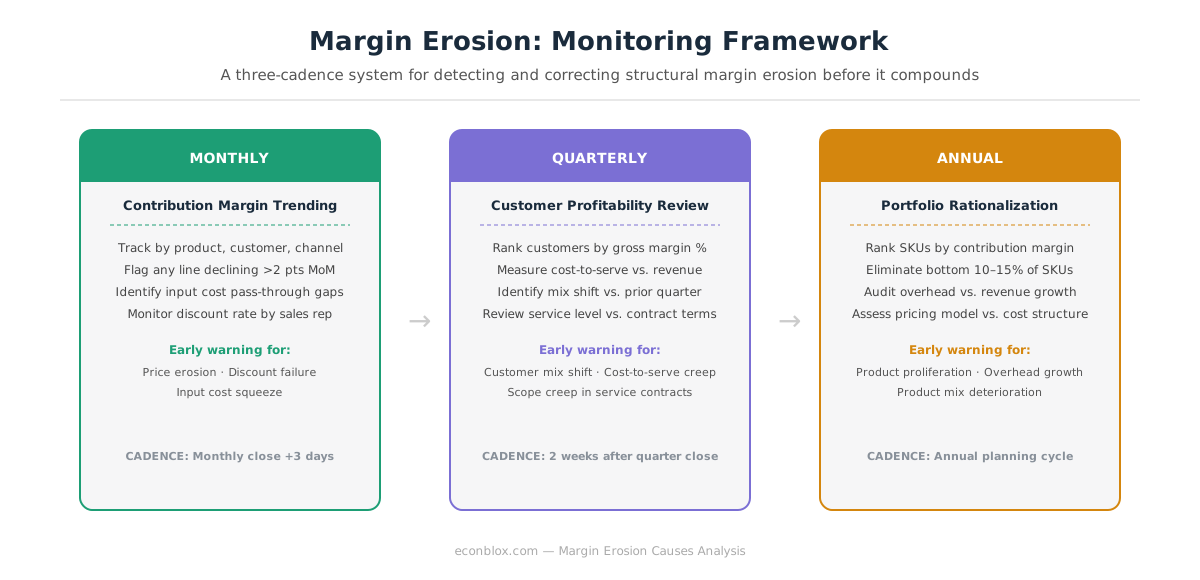
Why Blanket Cost Cutting Fails Against Margin Erosion
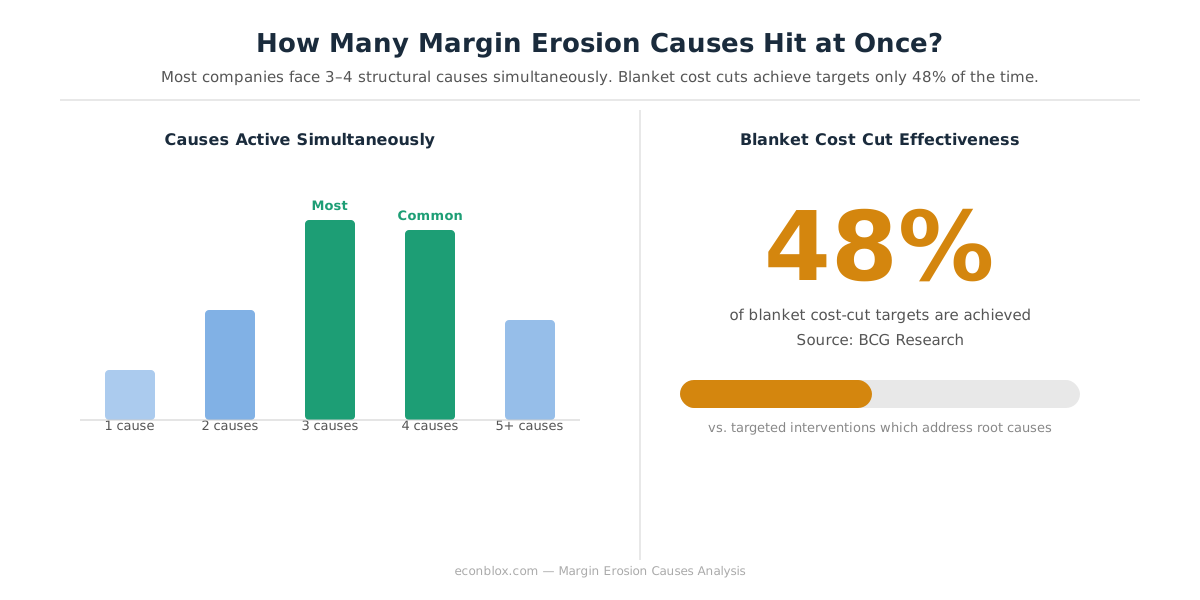
When margins shrink, the natural instinct is to cut costs across the board. But BCG research shows that only 48% of cost targets are achieved through blanket cuts. The reason is that across-the-board reductions do not address the specific structural margin erosion causes at work. A 10% cut in marketing might reduce customer acquisition at a time when customer mix is already shifting downward. A freeze on hiring might prevent a company from fixing cost-to-serve creep.
Instead of blanket cuts, targeted interventions are more effective. If input cost inflation is the primary cause, focus on supply chain optimization and price pass-through strategies. If discount discipline is failing, tighten approval processes and train sales teams on value-based pricing. Each cause requires a specific remedy.
Frequently Asked Questions
What is the difference between price erosion and pricing erosion?
Price erosion is market-driven and refers to a decline in average selling prices due to external factors such as competition or reduced demand. Pricing erosion results from internal failures in pricing discipline, such as excessive discounting or inconsistent pricing strategies. Both reduce margins but require different corrective actions.
Can margin erosion affect service-based businesses too?
Yes. Professional services firms experience margin erosion when delivery costs exceed planned costs due to bad estimates, scope creep, or poor resource management. Even if revenue targets are met, profit diminishes. Service-based businesses must track project profitability and client-level margins just as product companies do.
How many margin erosion causes typically affect a company at once?
Research indicates that most companies face three or four of the eight structural causes simultaneously. These causes interact in complex ways. Addressing only one may not restore margins. A comprehensive analysis of product mix, customer profitability, pricing discipline, and cost structure is needed to identify all active causes.
What is the best way to calculate margin erosion?
Gross margin is calculated as (Sales Revenue minus COGS) divided by Sales Revenue. A drop from 40% to 30% illustrates a 10 point erosion. However, gross margin alone does not reveal which cause is responsible. Tracking contribution margin by product, customer, and channel provides more actionable insights for identifying specific margin erosion causes.
Margin erosion is a complex threat that rarely stems from a single factor. It also accelerates rapidly when scaling. By understanding the full range of margin erosion causes and implementing continuous monitoring, business owners can protect their profitability and make informed strategic decisions that preserve long-term value. Left unaddressed, persistent margin degradation is a direct hit to business valuation for owners, as prospective buyers routinely use compressed historical margins to justify lower valuation multiples during acquisition due diligence.
 No Credit Card Required For Trial